
About Course
About this course
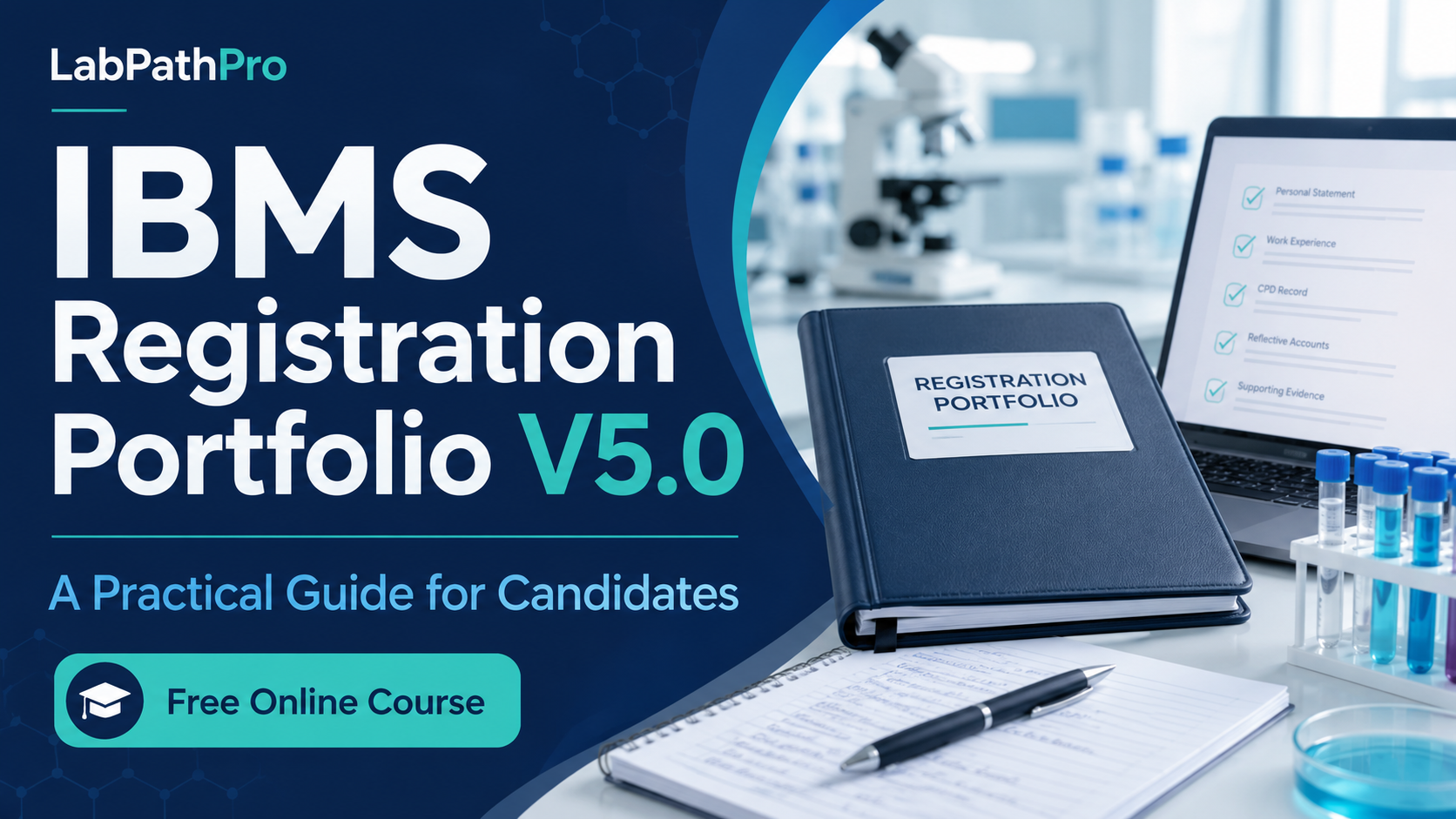
The IBMS Registration Training Portfolio is an important stage in becoming a registered Biomedical Scientist in the United Kingdom. This free introductory course provides biomedical science students, trainee Biomedical Scientists and new portfolio candidates with a practical explanation of how to approach the IBMS Registration Training Portfolio Version 5.0. The course explains the portfolio structure, the role of the Health and Care Professions Council Standards of Proficiency, evidence selection, reflective writing, referencing, confidentiality, OneFile preparation and the verification process.
Who is this course for?
- Biomedical science students preparing for laboratory training
- Trainee Biomedical Scientists completing the IBMS Registration Training Portfolio
- New portfolio candidates requiring an introductory overview
- Laboratory staff supporting candidates during training
What will you learn?
By the end of the course, you should be able to:
- describe the purpose and structure of the IBMS Registration Training Portfolio Version 5.0;
- recognise the ten portfolio modules and the 30-piece evidence model;
- distinguish between mandatory and candidate-choice evidence;
- select suitable evidence from routine laboratory practice;
- map evidence to the relevant HCPC Standards of Proficiency;
- differentiate between knowledge-based and competence-based evidence;
- write clear evidence justifications and reflective accounts;
- apply confidentiality, anonymisation and academic-integrity requirements;
- organise portfolio files and prepare evidence for OneFile; and
- develop a practical 30-day portfolio action plan.
Course format
The course contains seven structured topics, short lessons, biomedical laboratory examples, knowledge checks, practical planning activities and a final assessment.
- Level: Beginner
- Estimated study time: 2–3 hours
- Cost: Free
- Final assessment: 20 questions
- Recommended pass mark: 80%
Important professional notice
This course is an independent educational resource produced by LabPathPro. It is not an IBMS-accredited course and has not been approved or endorsed by the IBMS, HCPC, NHS or any individual employer. Candidates must follow the current official IBMS portfolio guidance, HCPC Standards of Proficiency, local laboratory procedures and advice from their training officer, portfolio assessor or verifier. This course does not replace formal workplace training, competence assessment or official portfolio requirements.
Free and accessible online course
This course is freely available to biomedical science students, trainee Biomedical Scientists and portfolio candidates. Work through the lessons at your own pace and use the practical activities to support discussions with your training officer.
Open-access assessments — no registration required
The Tutor LMS quiz engine may ask learners to sign in so it can save attempts and progress. If you simply want to study freely, use the open-access assessment page for all six topic checks and the final assessment.