
Dengue Fever, Low Platelets and Ibuprofen: How Blood Tests Help Diagnose and Monitor Infection
Introduction
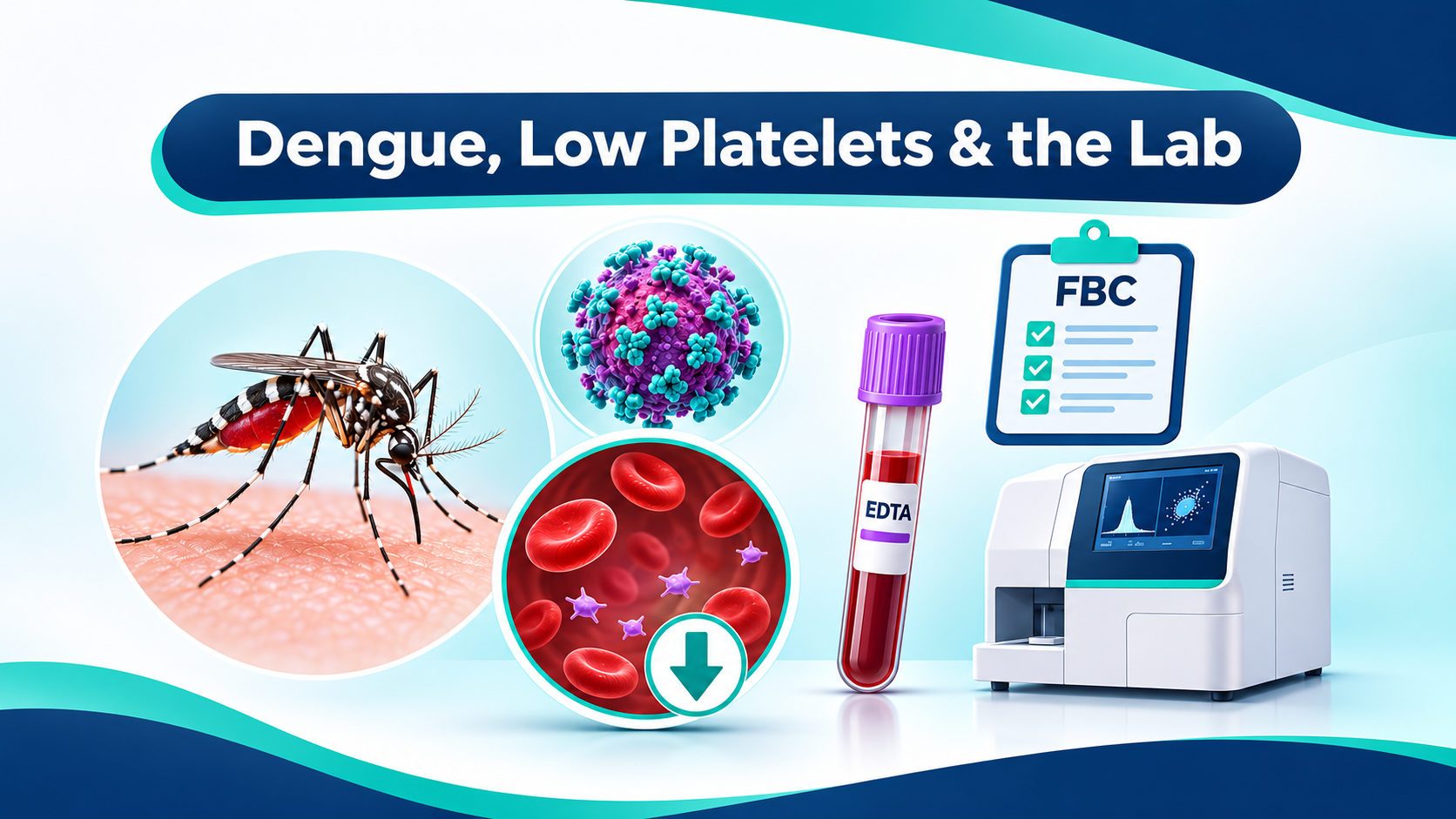
Imagine returning from a holiday abroad with a high temperature, headache, severe muscle pain and tiredness. You take ibuprofen for the fever, but the symptoms continue. A healthcare professional requests a full blood count (FBC), and the results show that your platelet count is falling.
Could this be dengue? Does a low platelet count mean that serious bleeding is inevitable? And why might a common painkiller such as ibuprofen be unsuitable?
Dengue is a mosquito-borne viral infection. Its symptoms can resemble other febrile illnesses, so the diagnosis depends on clinical assessment, travel history and, where indicated, laboratory confirmation. In addition to identifying the virus, laboratory tests help clinicians recognise changes that may indicate dehydration, plasma leakage, bleeding or organ involvement.
Key message: A low platelet count can occur in dengue, but the platelet count alone cannot confirm infection or accurately predict its severity. The trend in platelet count, haematocrit, symptoms and other investigations is more informative.
What is dengue fever?
Dengue is caused by dengue virus (DENV), which has four principal serotypes: DENV-1, DENV-2, DENV-3 and DENV-4. It is transmitted mainly by infected female Aedes mosquitoes, particularly Aedes aegypti. Dengue occurs in many tropical and subtropical regions, including parts of Asia, the Americas and Africa.
Symptoms typically begin several days after an infective bite and can include a high temperature, severe headache, pain behind the eyes, muscle and joint pain, nausea, vomiting and a rash. Some infections cause few or no symptoms. Most symptomatic patients recover, but a minority develop severe dengue, which may involve plasma leakage, shock, significant bleeding or organ damage.
In the UK, dengue is mainly a travel-associated diagnosis. UKHSA reported 344 confirmed and probable dengue cases in England, Wales and Northern Ireland in 2025, with travel history available for most cases. This underlines the importance of asking patients with unexplained fever about recent travel. See UKHSA surveillance.
What happens to platelets during dengue infection?
Platelets, also called thrombocytes, are small cell fragments produced by megakaryocytes in the bone marrow. They help form the initial plug at a site of blood vessel injury and interact with coagulation proteins to limit bleeding.
Thrombocytopenia means a lower-than-expected platelet count. A commonly used adult lower reference limit is around 150 × 10⁹/L, although laboratory reference intervals vary. Platelet counts can fall during dengue infection for several overlapping reasons:
- Reduced platelet production: Dengue-associated inflammation and viral effects on megakaryocytes may impair platelet formation in the bone marrow.
- Increased activation and consumption: Platelets can become activated during the inflammatory response and participate in abnormal interactions with blood vessels and immune cells.
- Increased destruction and clearance: Activated or damaged platelets may undergo apoptosis or be removed more rapidly from circulation, including through immune-mediated pathways.
These mechanisms help explain why the count may decline over several days. However, a falling count does not prove that a patient is bleeding. Haemorrhage in dengue is more complex and can involve vascular dysfunction, platelet function abnormalities, inflammation and coagulation disturbances.
Biomedical Science learning point: A numerical platelet result should be interpreted alongside the patient’s clinical condition and other laboratory parameters, rather than being treated as a stand-alone measure of bleeding risk.
Why should ibuprofen and aspirin be avoided in suspected dengue?
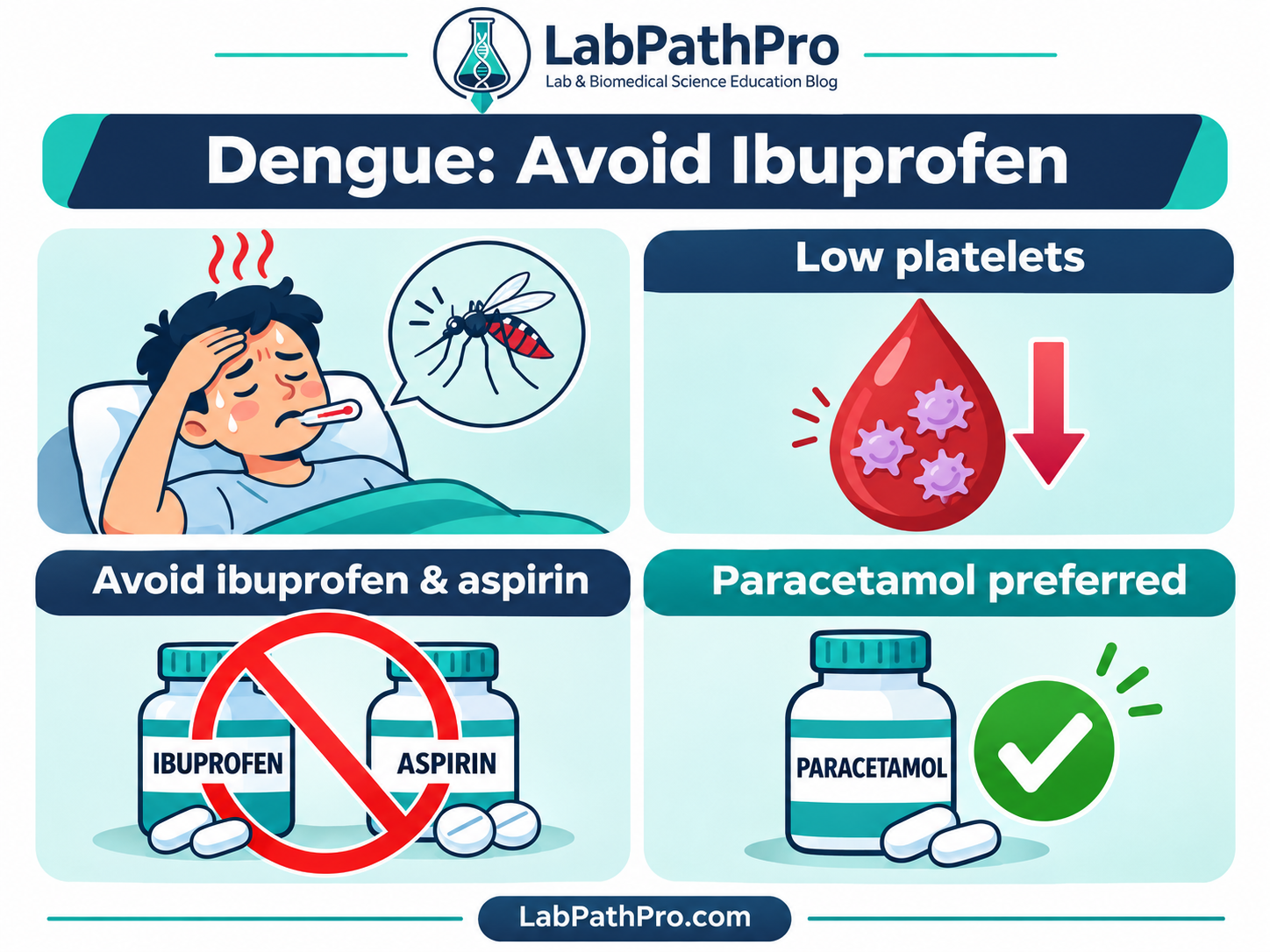
Ibuprofen belongs to the group of medicines called non-steroidal anti-inflammatory drugs (NSAIDs). NSAIDs inhibit cyclo-oxygenase enzymes and can affect platelet function. Ibuprofen’s platelet effects are reversible, while aspirin causes prolonged inhibition of platelet cyclo-oxygenase. NSAIDs can also irritate or damage the gastrointestinal lining and contribute to bleeding.
In dengue, patients may already have thrombocytopenia, platelet dysfunction or an increased tendency to bleed. Taking ibuprofen, aspirin or other NSAIDs may add to that risk. NHS, WHO and CDC guidance recommends avoiding NSAIDs when dengue is suspected or confirmed.
Is paracetamol a safer option?
Paracetamol is generally recommended for managing fever or pain in dengue when used at the correct dose and when there are no contraindications. It is not a treatment for the virus itself. Patients with liver disease or possible severe dengue-related liver involvement need individual clinical advice because excessive paracetamol can damage the liver.
People taking prescribed low-dose aspirin or other antiplatelet/anticoagulant medicines for another medical condition should not independently stop or change those medicines; they should seek prompt advice from the treating clinician. Anyone who has already taken ibuprofen before dengue was suspected should avoid additional doses until assessed and should tell the healthcare professional what they have taken.
What can a full blood count reveal in dengue?
A full blood count (FBC) is one of the most useful routine laboratory investigations when dengue is suspected or being monitored. It measures red-cell parameters, white blood cells and platelets. It does not detect dengue virus directly, but it can show changes that support assessment of the disease’s progression.
| FBC parameter | Possible finding | Why it matters |
|---|---|---|
| Platelet count | Platelets may progressively fall | Supports monitoring for thrombocytopenia; count alone does not define bleeding risk |
| White blood cell count (WBC) | Leukopenia (low WBC) is common | Supports consideration of a viral illness but is not specific for dengue |
| Haematocrit (HCT) | May rise as plasma escapes from circulation | A rising trend may indicate haemoconcentration from plasma leakage |
| Haemoglobin (Hb) | May rise with haemoconcentration | Can complement HCT; interpretation is influenced by baseline values and fluid balance |
| HCT/Hb in a deteriorating patient | May fall with significant bleeding or after intravenous fluids | Must be assessed urgently in the clinical context |
Platelet count: why the trend matters
A patient with a platelet count of 110 × 10⁹/L that is rapidly falling may need closer assessment than someone with a stable value at a similar level. The timing of the illness, symptoms, observations and other blood results all matter. Neither an isolated low count nor a normal count early in the illness confirms or excludes dengue.
White blood cells: what is leukopenia?
Leukopenia means a reduced number of white blood cells. It is common during dengue and may develop before or alongside thrombocytopenia. However, many viral illnesses and some other conditions can cause leukopenia, so it is not diagnostic on its own.
Haematocrit: an especially important result
Haematocrit is the proportion of blood volume occupied by red blood cells. In severe dengue, increased capillary permeability can allow plasma fluid to move from the circulation into surrounding tissues. Red cells become relatively concentrated within the remaining circulating blood, and haematocrit may rise. This is called haemoconcentration.
A progressively increasing haematocrit, especially around the time the fever starts to settle, can be a warning of plasma leakage. A stable or falling haematocrit must also be interpreted carefully: fluid replacement can dilute the blood, while a fall associated with haemodynamic deterioration may suggest bleeding.
Remember: A falling platelet count together with a rising haematocrit can be concerning, but clinical observations and serial measurements are essential. No single laboratory pattern automatically diagnoses severe dengue.
The three phases of dengue and the value of repeat blood tests
Clinicians often describe three overlapping stages:
1. Febrile phase
The patient develops fever, aches and other symptoms. WBC may decrease, and platelets can begin to fall. Early virological tests are particularly useful during this period.
2. Critical phase
The critical phase often begins around the time the fever subsides, typically somewhere between days 3 and 8 after onset. It can last approximately 24–48 hours. In some patients, vascular leakage increases, haematocrit rises and platelets reach their lowest values. Clinical warning signs can emerge even though the temperature is improving.
3. Recovery phase
Fluid leakage resolves and circulating fluid is reabsorbed. The WBC often begins to recover, followed by the platelet count. Haematocrit can stabilise or fall as the fluid balance changes. Appropriate monitoring remains important during recovery.
Important: The timing varies between patients. An educational timeline must not be interpreted as a precise prediction of when a patient will deteriorate or recover.
Which laboratory tests confirm dengue infection?
FBC results are useful for monitoring, but a dengue-specific test is required for laboratory confirmation. The most suitable investigation depends on the time since symptoms began, local availability and the patient’s infection history.
| Test | What is detected? | When is it most useful? | Important limitation |
|---|---|---|---|
| Dengue RT-PCR / NAAT | Viral RNA | Usually during the first 0–7 days of illness | A negative result does not exclude infection |
| Dengue NS1 antigen | Viral non-structural protein 1 | Usually early illness, particularly the first 0–7 days | Sensitivity varies, including with previous dengue infection |
| Dengue IgM | Antibody response to recent infection | Increasingly useful from about day 4–5; principal serological test after day 7 | A single positive result is generally presumptive and can cross-react with other flaviviruses |
| Dengue IgG | Antibody response, including previous infection | Useful in selected paired-serum or specialist interpretations | A single positive IgG cannot reliably establish acute dengue |
RT-PCR: detecting viral genetic material
Reverse-transcription polymerase chain reaction (RT-PCR) detects dengue viral RNA. It is especially helpful during the early phase of infection. Some molecular methods can identify which of the four dengue serotypes is present. A positive validated dengue NAAT establishes evidence of acute infection.
NS1 antigen: detecting a dengue protein
NS1 is a dengue viral protein that can be detected in blood during the acute phase. The test can provide early evidence of dengue before antibodies have developed. A negative result does not exclude dengue, particularly when clinical suspicion remains high.
IgM antibodies: detecting the immune response
IgM typically becomes detectable several days after symptom onset. A positive single-sample IgM result supports a recent infection but requires careful interpretation. Antibodies can persist for months, and cross-reactivity with other flaviviruses, such as Zika virus, can make serology difficult to interpret. The response may also differ during repeat dengue infections.
Why IgG alone is insufficient
An isolated positive dengue IgG test may reflect previous infection rather than the illness currently being investigated. Interpretation may require paired samples, complementary assays or advice from a reference laboratory.
Typical testing approach: During days 0–7, CDC recommends a dengue NAAT plus IgM, or NS1 antigen plus IgM. After day 7, IgM testing usually becomes the primary approach. UK sample referral requirements should follow current UKHSA/RIPL guidance.
What other laboratory tests help monitor dengue?
Liver function tests
AST and ALT can be elevated in dengue because of hepatic involvement and systemic inflammation. Bilirubin, albumin and other liver-related measurements may be useful depending on the clinical presentation. Markedly abnormal liver results warrant careful clinical assessment; liver biochemistry is not specific to dengue.
Urea, creatinine and electrolytes
Renal function and electrolyte measurements can help identify dehydration, kidney injury or abnormalities such as hyponatraemia. These investigations are particularly relevant in patients who are vomiting, deteriorating or require intravenous fluid therapy.
Albumin
A falling serum albumin concentration can occur in severe disease, including with plasma leakage, but it may have other causes. It is a supportive marker and should never be interpreted in isolation.
Coagulation testing
In patients with bleeding or severe illness, investigations such as prothrombin time (PT), activated partial thromboplastin time (APTT) and fibrinogen may help assess haemostasis. Routine coagulation tests may be normal or abnormal and do not independently establish a dengue diagnosis.
Differential diagnosis
Recent travel with fever also raises the possibility of malaria, which can be life-threatening and requires urgent appropriate assessment and testing. Other conditions, such as chikungunya, Zika, bacterial infection or other viral illnesses, may resemble dengue. A dengue-focused laboratory request must not delay investigation for other serious causes of fever.
The Biomedical Scientist’s role in dengue diagnosis and monitoring
Biomedical Scientists contribute at several stages, from checking sample suitability to recognising analytical problems and ensuring results reach clinical teams promptly.
1. Pre-analytical assessment
The FBC is commonly performed using a correctly filled EDTA (purple-top) blood sample. The laboratory checks patient identification, sample type, specimen volume, clotting and any local acceptance criteria. The specimen required for dengue molecular or serological testing may differ and must follow the performing laboratory’s instructions.
2. Analytical quality
FBC analysers measure cell populations and calculate indices under validated laboratory procedures. Internal quality control, calibration or verification requirements and external quality assessment support reliable testing. Quality control and calibration are different processes.
3. Reviewing low platelet counts
An unexpectedly low platelet result may trigger analyser flags and laboratory review. EDTA-dependent platelet clumping can cause a falsely low automated count (pseudothrombocytopenia). Blood-film examination, and an alternative sample where indicated by local procedures, can help resolve this issue. A blood film can therefore support FBC interpretation, but it does not confirm dengue infection.
4. Recognising trends and escalating results
Laboratories may compare new findings with previous counts, apply delta checks, review analyser flags and follow local critical-result communication procedures. The urgency of escalation depends on the actual results, laboratory policy and clinical information. An appropriately authorised member of the laboratory team may need to contact the responsible clinical service about a significant or unexpected finding.
5. Virology and reference laboratory testing
Virology services perform or arrange dengue-specific testing, document assay limitations and interpret results with clinical and travel history. In the UK, UKHSA’s Rare and Imported Pathogens Laboratory (RIPL) provides specialist advice and diagnostic testing. Samples should be referred through approved pathways with appropriate clinical and travel details.
6. Clinical communication and public health
Accurate, timely laboratory reports support clinical decision-making, safe patient monitoring and public health surveillance. They also help distinguish dengue from other infections that may require different management.
Case study: what do serial blood results tell us?
The following case is fictional and is included for educational purposes. Values are illustrative, not diagnostic cut-offs or a treatment protocol.
A 29-year-old adult returns to the UK following travel in a dengue-endemic area and develops fever, headache and muscle pain. A clinician requests an FBC and dengue-specific tests.
| Illness day | Platelets (× 10⁹/L) | WBC (× 10⁹/L) | Haematocrit | Clinical context |
|---|---|---|---|---|
| Day 2 | 158 | 3.6 | 42% | Febrile; clinical assessment initiated |
| Day 4 | 98 | 2.9 | 44% | Platelet count falling |
| Day 5 | 58 | 3.2 | 48% | Fever settling; rising haematocrit requires clinical review |
| Day 7 | 74 | 4.3 | 44% | Improving observations and laboratory trends |
| Day 9 | 132 | 5.5 | 42% | Recovery trend |
An early dengue RT-PCR is positive. This confirms acute dengue infection in the relevant clinical context. The declining platelet count and rising haematocrit around day 5 are potentially concerning, particularly if accompanied by warning signs, but these results must not be interpreted without vital signs, hydration assessment and clinical examination.
Questions for trainees:
- Why is the patient’s haematocrit trend relevant when the platelet count falls?
- Why should an improving temperature not be accepted as proof of clinical recovery?
- What pre-analytical or analytical explanations should be considered if a platelet result is unexpectedly low?
- Why can an early negative IgM result occur even when dengue is present?
Suggested interpretation: The combination of a confirmed dengue infection, falling platelets and rising haematocrit requires careful clinical assessment and appropriate repeat monitoring. The laboratory identifies the pattern, checks result reliability and communicates results; the responsible clinical team determines treatment and monitoring intensity.
Does a low platelet count mean a platelet transfusion is needed?
Not automatically. Platelet transfusion is not routinely recommended merely to correct a low count in dengue when there is no clinically significant bleeding. WHO/CDC recommendations discourage prophylactic platelet transfusions because they do not reliably prevent bleeding and may cause complications. Clinicians assess bleeding, haemodynamic stability and the broader clinical circumstances when deciding whether any blood component is appropriate.
This is a useful example of why a laboratory result helps guide care but does not replace clinical assessment.
When should a patient seek urgent medical attention?
Dengue can worsen as fever decreases. Seek urgent medical assessment for warning signs such as severe or persistent abdominal pain, repeated vomiting, bleeding from the gums or nose, unusual drowsiness or restlessness, or worsening weakness. Vomiting blood, passing black or bloody stools, collapse, severe breathlessness or signs of shock require emergency care. In the UK, use NHS 111 for urgent advice when appropriate or 999/A&E for a medical emergency.
Anyone with fever after travel to a dengue-endemic region should seek medical advice and mention their destination and travel dates. Do not wait for an FBC result or dengue confirmation before seeking help if warning signs are present.
Frequently asked questions
Can dengue cause a very low platelet count?
Yes. Dengue can cause substantial thrombocytopenia, but severity is not determined by the platelet count alone. Clinicians evaluate bleeding, plasma leakage, organ function and vital signs together.
Can I take ibuprofen if I think I have dengue?
Avoid ibuprofen, aspirin and other NSAIDs unless the responsible clinician specifically advises otherwise. They can increase bleeding risk. Paracetamol is usually the preferred fever or pain medicine when appropriate and used safely.
Does a normal platelet count exclude dengue?
No. Platelet counts may be normal early in illness. Dengue-specific tests and clinical assessment are needed when dengue is suspected.
When should dengue PCR or NS1 testing be performed?
They are usually most useful during the first seven days after symptoms begin. The exact diagnostic approach depends on local protocols, illness timing and the test used.
What if dengue IgM is negative?
A negative IgM result early in illness does not exclude dengue because antibodies may not yet be detectable. The clinician or laboratory may recommend NAAT, NS1 testing or later serology depending on the circumstances.
What does a rising haematocrit mean in dengue?
It may indicate haemoconcentration due to plasma leakage, especially if it rises progressively around the critical phase. Hydration status, previous results and concurrent clinical findings are essential for interpretation.
Do all dengue patients need repeated FBC tests?
The frequency depends on severity, warning signs, the stage of illness and clinical assessment. Patients requiring closer monitoring may need serial FBC/haematocrit results; outpatient arrangements must follow the treating team’s guidance.
Can a blood film diagnose dengue?
No. A blood film can assist with platelet count verification and investigation of other blood-cell abnormalities, but dengue is confirmed using appropriate virological or serological methods.
Key points to remember
- Dengue is a mosquito-borne viral illness, particularly relevant to patients with fever after travel to an endemic region.
- Low platelets are common, but platelet count alone cannot diagnose dengue or predict serious bleeding.
- A rising haematocrit, particularly around the critical phase, may indicate plasma leakage.
- Ibuprofen, aspirin and other NSAIDs should generally be avoided in suspected dengue because of bleeding risk.
- Paracetamol is usually preferred for fever and pain when used appropriately.
- RT-PCR/NAAT and NS1 antigen support early laboratory confirmation; IgM is more useful later.
- Biomedical Scientists help ensure sample quality, analytical reliability, appropriate result review, timely reporting and clinical communication.
- Severe dengue is a clinical emergency; laboratory testing supports but does not replace prompt patient assessment.
References and further reading
- World Health Organization. Laboratory testing for dengue virus: interim guidance. Geneva: WHO; 28 April 2025. Read source
- World Health Organization. WHO guidelines for clinical management of arboviral diseases: dengue, chikungunya, Zika and yellow fever. Geneva: WHO; 2025. Read source
- Centers for Disease Control and Prevention. Clinical Testing Guidance for Dengue. Updated 26 August 2025. Read source
- Centers for Disease Control and Prevention. Clinical Care of Dengue. Updated 15 April 2026. Read source
- Centers for Disease Control and Prevention. Clinical Features of Dengue. Updated 24 February 2026. Read source
- NHS. Dengue. Read source
- UK Health Security Agency. Dengue fever: guidance, data and analysis. Read source
- UK Health Security Agency. Travel-associated infections in England, Wales and Northern Ireland: 2025. Read source
- Khazali AS, Hadrawi WH, Ibrahim F, Othman S, Rashid NN. Thrombocytopenia in dengue infection: mechanisms and a potential application. Expert Rev Mol Med. 2024;26:e26. doi:10.1017/erm.2024.18. Read source
Medical disclaimer
This article is for educational purposes only. It does not replace professional medical advice, diagnosis or treatment. Laboratory testing pathways, reference intervals and clinical protocols can vary between providers. Anyone with suspected dengue, recent travel-associated fever, bleeding or warning symptoms should seek appropriate clinical assessment. Patients should not stop prescribed aspirin, anticoagulants or other medicines without advice from their treating healthcare professional.